2026-10-22 ·
How to Spot When Spray Foam Is Causing Damp in Cheltenham Homes
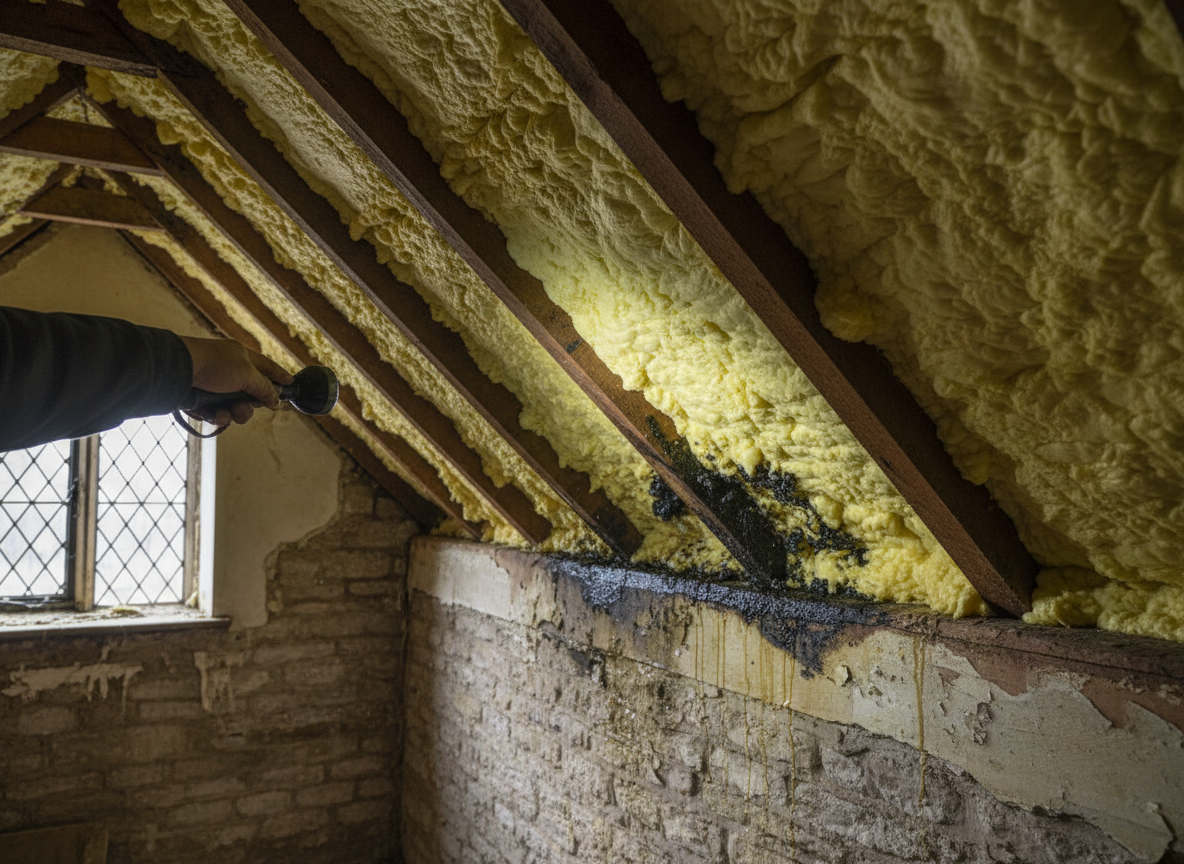
Spray foam insulation often causes damp in Cheltenham homes by sealing moisture against timber joists and brickwork, with black mold patches appearing on ceilings or walls within 3–7 years in pre-1950 properties around areas like Lansdown and Montpellier.
Visible Mold and Staining Patterns
Homeowners in Cheltenham frequently notice dark patches forming along ceiling joists or where spray foam meets external walls. These stains differ from standard condensation because they follow the foam's spray lines rather than spreading evenly. In older terraces common to the Cheltenham area, the closed cell type blocks breathability, allowing water to pool behind the layer during Gloucestershire's frequent autumn rains. Inspect by lifting loft boards near the eaves to check for discoloration on rafters. If staining aligns with foam edges, moisture is likely trapped rather than entering from outside leaks.
Musty Odors and Air Quality Changes
A persistent earthy smell in upstairs rooms or the loft space signals spray foam restricting airflow in Cheltenham properties. This odor intensifies after rain because local clay soils hold water longer, pushing humidity upward into roof voids. Residents near the racecourse or Pittville often report the smell strongest in winter when heating draws damp air through small gaps. Unlike general household damp, the odor here stays localized to insulated zones and fades only after ventilation improves. Track the smell over several weeks to confirm it ties to the foam rather than plumbing issues.
Timber Softness and Structural Clues
Probe joists with a screwdriver in lofts where spray foam was applied; soft spots indicate rot from trapped condensation common in Cheltenham's older Victorian stock. These homes, built with solid walls, suffer more because foam prevents the natural drying that lime plaster once allowed. Check load-bearing timbers near gable ends first, as wind-driven rain from the Cotswolds hills increases exposure. Softness usually starts at the foam-wood interface and spreads inward over 4–8 years. Document any flex in boards when walking the loft to assess progression before it affects ceilings below.
Seasonal Moisture Spikes in Local Conditions
Cheltenham winters bring prolonged damp periods that highlight spray foam problems faster than in drier UK regions. When temperatures drop, warm indoor air meets cold foam surfaces, creating condensation lines that homeowners spot as water beads on rafters. Properties in Tewkesbury Road or near the River Chelt see faster issues due to higher groundwater levels. Compare readings from a simple moisture meter on insulated versus uninsulated sections to isolate the cause. These patterns repeat yearly, unlike random leaks that appear after storms.
For a full insulation assessment in your Cheltenham property, review details on insulation assessment. Related guidance appears in Assessing Spray Foam in Older Cheltenham Houses and Winter Moisture Risks from Spray Foam in Cheltenham Properties.