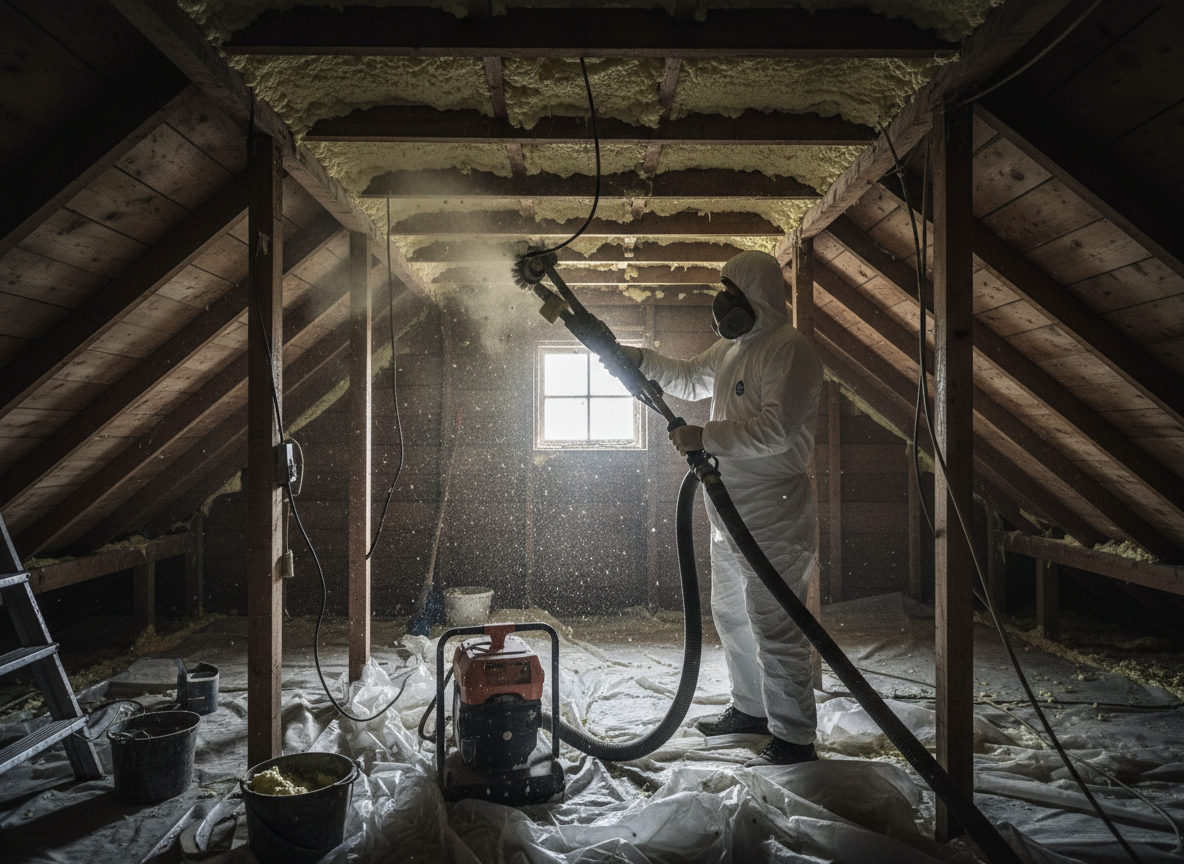
Attic spray foam in Cheltenham properties is often closed-cell polyurethane applied decades ago to older Regency and Victorian terraces. Removing it requires careful separation from timber joists and lathe ceilings without damaging original roof structures common in GL51 postcodes. Moisture trapped beneath the foam frequently leads to rot in Cheltenham's damp winters, so inspection must check for hidden water ingress along valley gutters and chimney stacks before any extraction begins.
Homeowners in Cheltenham often discover the foam has bonded to electrical cabling and pipework running through lofts of 1920s semis. Extraction crews must isolate these services first and use negative-pressure containment to prevent dust migration into living spaces below. Local building control may require notification if the work affects insulation levels in listed buildings around Montpellier or Pittville, so crews coordinate disposal at Gloucestershire recycling centres that accept cured foam waste.
Edge cases in the Cheltenham area include foam applied over original mineral wool in 1960s council houses near Runnings Road. The two materials react differently during removal, creating additional mess that must be vacuumed separately. Crews also watch for asbestos-containing insulation boards around loft hatches in pre-1980 homes, pausing work immediately if suspect materials appear so licensed testing can occur before proceeding.
Technician insight
In Cheltenham, the thing that catches most people out with attic spray foam removal is how often the foam was sprayed right over the original lath and plaster ceilings in Victorian terraces around the town centre. Once winter temperatures drop and condensation builds, the timber below starts rotting before homeowners notice, turning a straightforward peel job into a repair that needs new joist sections.
Pittville Terrace Loft
Homeowner noticed musty smell and sagging ceiling in a 1890s terrace near Pittville Park. Inspection found closed-cell foam bonded directly to laths with active rot along the eaves. Crew isolated electrics, removed foam in sections under containment, treated affected timber and left the loft ready for new insulation.
How it works
- 1
Initial Loft Inspection
Assess foam type, depth, attachment to joists and any hidden services or damp in Cheltenham attics.
- 2
Containment Setup
Install negative pressure and dust barriers to protect living areas below during removal.
- 3
Mechanical Extraction
Cut and peel foam in sections while protecting timber and cabling common in local older homes.
- 4
Waste Removal And Disposal
Bag and transport cured foam to approved Gloucestershire facilities while documenting volumes.
- 5
Final Clean And Handover
Vacuum residues, check for remaining damp issues and advise on next insulation steps.
Pricing
Pricing depends on attic size, foam thickness and access difficulty in Cheltenham properties; quotes provided after inspection.