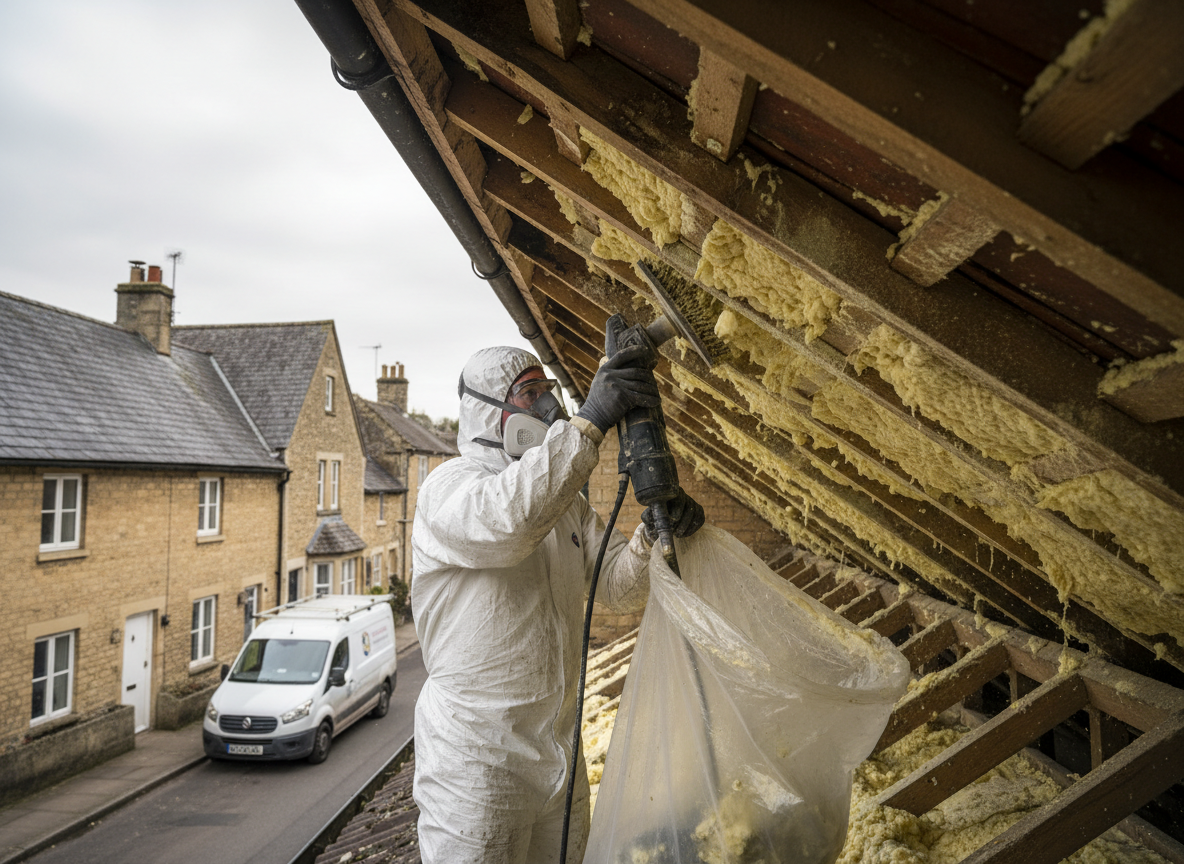
Cheltenham homes, particularly those built before the 1980s in areas around the town centre and along roads like Runnings Rd, often feature pitched roofs with limited loft access and original timber construction. Spray foam applied directly to rafters traps moisture against the slate or tile covering, leading to rot and poor airflow that standard ventilation cannot fix. Removal requires careful cutting and scraping without damaging the roof structure, followed by disposal that complies with local waste rules in Gloucestershire.
Winter rain and high humidity in the Cheltenham area accelerate the breakdown of closed-cell foam, causing it to delaminate and block any remaining airflow paths. Homeowners in surrounding villages frequently discover the issue during loft inspections when replacing old insulation or addressing condensation on ceilings. The process demands dust containment sheeting and negative air machines because disturbing the foam releases particles that settle on stored items and insulation below.
Edge cases include foam that has expanded into electrical cables or pipework runs common in terraced properties near Cheltenham Racecourse. These situations require isolating circuits and protecting services before mechanical removal begins. Post-removal inspection often reveals original roof felt that needs replacement to restore proper breathability, a step skipped when foam was first installed.
Technician insight
In Cheltenham, the thing that catches most people out with Spray Foam Removal near me is how the foam has crept behind fascia boards on Victorian terraces during the wet winters here. Once it reaches the gutter line the removal takes twice as long because you have to work from scaffolding without dropping debris onto neighbouring roofs.
Condensation Issues in a Cheltenham Terrace
Homeowner noticed black mould along ceiling edges in a pre-war terrace near the town centre. Inspection showed closed-cell foam blocking all eaves vents and trapping roof moisture. We removed the foam section by section, cleared the blocked vents, and left the roof space ventilated again.
How it works
- 1
Site Assessment
Inspect roof voids, measure foam depth, and identify access points in Cheltenham properties while checking for hidden services.
- 2
Containment Setup
Install dust barriers and extraction equipment to prevent particles spreading through the house during removal.
- 3
Foam Extraction
Cut and remove foam in sections, clearing rafters and eaves without damaging timber or roof coverings.
- 4
Clearance And Disposal
Vacuum residues, remove all waste from site, and verify the space is left ready for new ventilation or insulation.
Pricing
Costs depend on property size, foam thickness and access difficulty. Upfront quotes given after inspection from our Runnings Rd base.