Cheltenham's Victorian and Edwardian terraces often received spray foam insulation in lofts during the 2000s push for energy efficiency. Over time this closed-cell material traps moisture against rafters and felt, especially when winter rain drives under tiles on properties near the Cotswold escarpment. Homeowners notice musty smells or peeling plaster in upstairs rooms before realising the foam has blocked the original eaves ventilation that these pre-1914 buildings relied on.
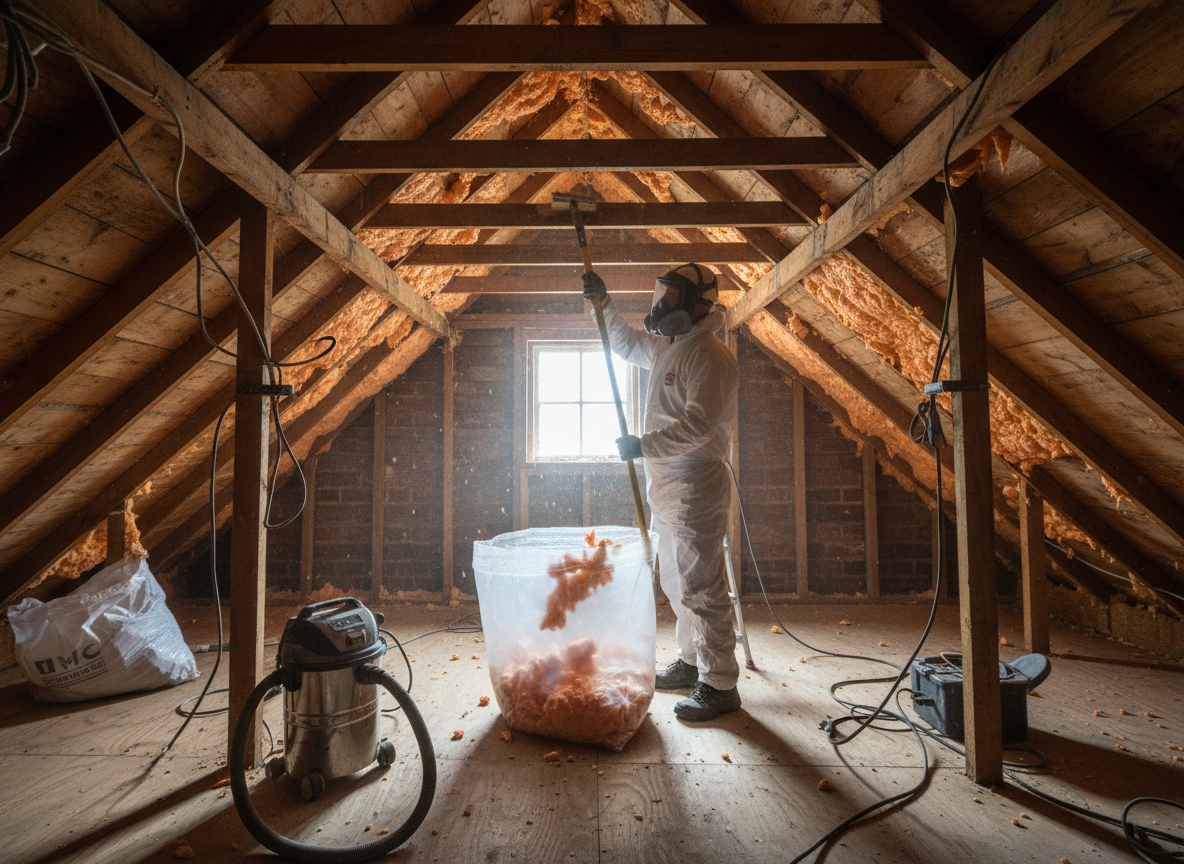
Removal requires careful separation of the foam from timber and masonry without damaging original lath and plaster ceilings below. In the Cheltenham area the work is further complicated by narrow terraced access routes and the need to protect neighbouring properties from dust during extraction. Once the foam is gone, restoring airflow through the eaves and checking for rot in the rafters becomes the priority before any new insulation is considered.
Local building control in Gloucestershire now expects ventilation to be reinstated to current standards after foam removal. This means fitting eaves vents and possibly ridge ventilation on roofs that have been altered over decades. Skipping this step leaves the property vulnerable to the same condensation problems that prompted the original insulation work.
Technician insight
In Cheltenham, the thing that catches most people out with Residential Spray Foam Removal is the hidden moisture trapped behind the foam in properties built before the 1950s, especially during our wet winters when rain drives into the eaves on Runnings Road and similar spots.
Terrace Loft Clearance Off Runnings Road
Homeowner reported persistent damp patches on bedroom ceilings in a 1930s Cheltenham terrace. Inspection revealed closed-cell foam had sealed the original eaves, trapping condensation against the rafters. We removed the foam, fitted new eaves vents and cleared the debris. The ceiling dried out within weeks and the musty smell disappeared.
How it works
- 1
Site Inspection
Assess loft access, foam depth, timber condition and existing ventilation in Cheltenham properties.
- 2
Containment Setup
Protect living spaces and neighbouring homes with dust barriers before extraction begins.
- 3
Foam Extraction
Mechanically remove the spray foam while preserving rafters and original roof structures.
- 4
Ventilation Restoration
Install appropriate eaves and ridge vents to suit the age and roof pitch of the building.
- 5
Final Clearance
Remove all debris, inspect for hidden damp and leave the loft ready for follow-up works.
Pricing
Quotes provided after on-site inspection; cost depends on loft size, foam thickness and access constraints typical of Cheltenham terraces.