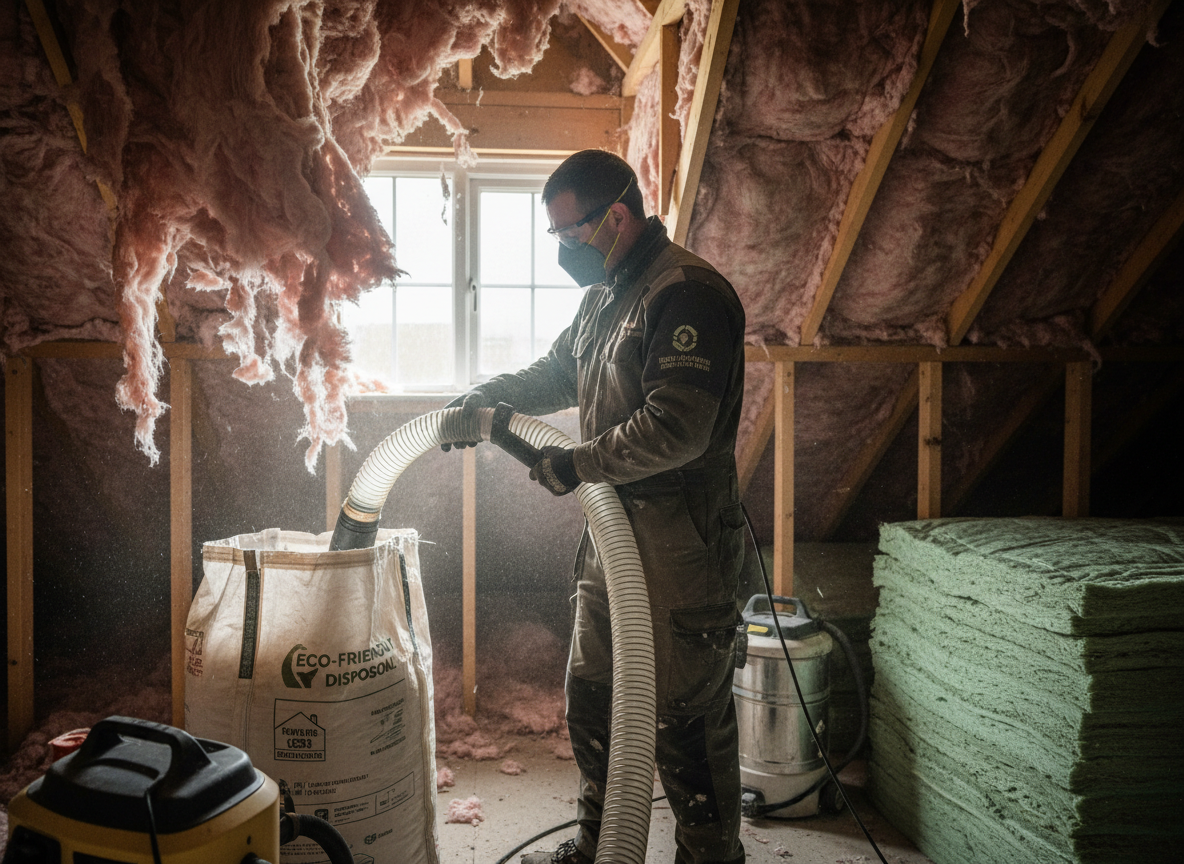
Cheltenham's older housing stock, particularly Victorian and Edwardian terraces in areas like Montpellier and Pittville, often received spray foam insulation in lofts and under floors during energy upgrades. Over time this material can trap moisture against timber and stone, leading to rot and poor ventilation. Environmentally friendly removal focuses on mechanical extraction with dust containment rather than chemical solvents, followed by responsible recycling of the foam where facilities in Gloucestershire allow.
Weather patterns in the Cheltenham area bring frequent rain and high humidity, especially in winter, which accelerates degradation of foam that was applied without proper vapour barriers. Technicians must work around original roof structures and party walls common in these homes, using negative air machines and sealed chutes to prevent particles migrating into living spaces or neighbouring properties. Edge cases include foam that has bonded to electrical cables or pipework, requiring slow, section-by-section removal to avoid damage.
Local building regulations in Cheltenham emphasise maintaining breathability in period properties. Removing foam often reveals the need for improved ridge and eaves ventilation to prevent future condensation. Crews based on Runnings Rd can respond quickly at any hour, bringing containment kits sized for tight loft hatches found in many semis and terraces around the town.
Proper disposal routes matter because spray foam is not standard household waste. Materials are bagged on site, transported to licensed recycling points serving the Gloucestershire region, and the property is left clean for follow-up insulation choices such as mineral wool or natural fibre options.
Technician insight
In Cheltenham, the thing that catches most people out with environmentally friendly insulation removal is how foam in older terraces around the town centre bonds tightly to lath and plaster ceilings, so any rushed extraction cracks the original ceilings and sends dust into rooms below.
Loft Foam Removal in a Montpellier Terrace
Homeowner reported persistent damp smells in a Cheltenham terrace loft. Inspection showed closed-cell foam trapping moisture against the roof deck. We extracted the foam using contained mechanical methods, disposed of it through local recycling channels, and opened ventilation paths. The loft dried out and the property avoided further timber damage.
How it works
- 1
Site Assessment
Inspect loft or wall cavities in the Cheltenham property, identify foam type and extent, and note any moisture or structural issues.
- 2
Containment Setup
Install dust barriers, negative air filtration, and sealed extraction points to protect living areas and neighbouring homes.
- 3
Foam Extraction
Use mechanical tools to remove foam in sections, avoiding damage to original timbers, wiring, and stonework typical in local housing.
- 4
Eco Disposal and Cleanup
Bag and transport waste to licensed Gloucestershire facilities, then clean the space and advise on ventilation improvements.
Pricing
Pricing varies by property size, foam depth, and access difficulty; we provide upfront quotes after a site visit.