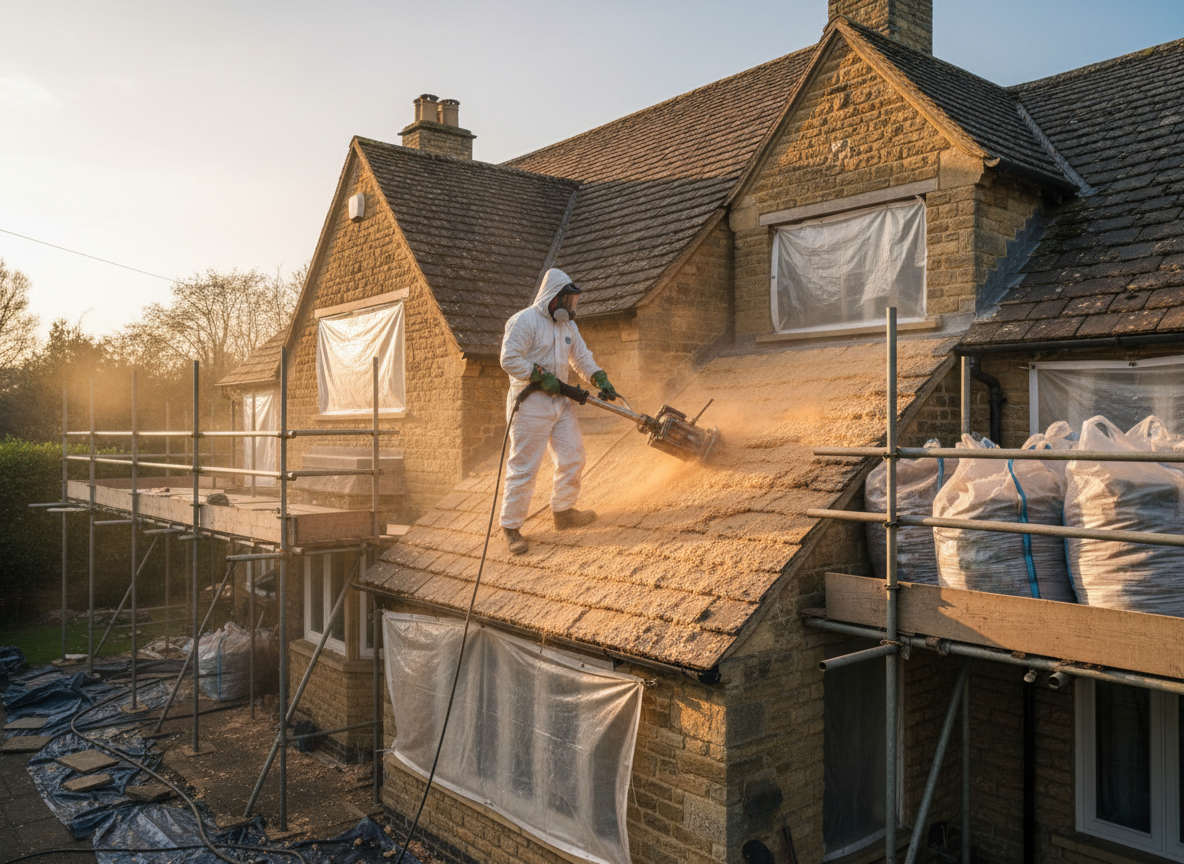
Cheltenham's Victorian terraces and 1960s semis often received spray foam in the 2000s to cut heat loss through slate or tile roofs. Over time the foam traps moisture against rafters, especially during the county's frequent winter rain that soaks through small tile slips. Removal requires cutting the foam in controlled sections so it does not drop insulation fibres into living spaces below. Workers must also check for rot that has started where the foam met the original felt or sarking boards.
Edge cases appear on properties near the Cotswold escarpment where wind-driven rain hits harder. Foam bonded directly to rafters needs mechanical scraping followed by solvent wipes; any residue left behind prevents new insulation from adhering later. Electrical cables and junction boxes hidden inside the foam must be located first, because pulling the material can damage wiring that has become brittle with age. Local building control sometimes requires a notice when the work affects the roof structure on listed buildings in the town centre.
Homeowners commonly try to peel the foam themselves and leave small pockets behind; these pockets later cause condensation stains on bedroom ceilings once the heating season starts. Proper removal includes bagging all waste on site and vacuuming rafters before any new material goes in. The Runnings Road base allows same-day mobilisation when a leak is reported after heavy rain.
Common mistakes during roof spray foam removal
Homeowners often underestimate how much dust and debris falls through the ceiling joists once the foam is cut. Professional teams lay full floor protection and seal loft hatches before starting. Another frequent issue is failing to ventilate the roof space properly after removal, which can leave timber damp for months in Gloucestershire's humid climate.
Technician insight
In Cheltenham the thing that catches most people out with roof spray foam removal is how the 1960s post-war semis on the north side of town trap rainwater against the party walls once the foam is cut. The foam often bridged the gap between the roof and the brickwork, so pulling it exposes hidden damp that has been sitting there for years.
Foam removal after winter leak in Pittville
A terrace in Pittville reported brown stains on bedroom ceilings after December storms. We found the closed-cell foam had delaminated from the rafters, allowing water to pool against the original felt. The foam was cut away in sections, rafters dried and cleaned, and the roof left ventilated. No further staining appeared the following winter.
How it works
- 1
Site inspection and moisture check
We survey the loft, test rafter moisture levels and identify any hidden electrical runs or rot.
- 2
Controlled foam cutting and extraction
Foam is sliced into manageable sections and removed without disturbing original roof timbers.
- 3
Rafter cleaning and waste removal
Remaining residue is scraped and wiped; all material is bagged and taken from site the same day.
- 4
Final ventilation and handover
We confirm the roof space can breathe again and advise on next insulation options if required.
Pricing
Cost varies with roof size, foam thickness and access; most Cheltenham jobs are quoted after inspection.