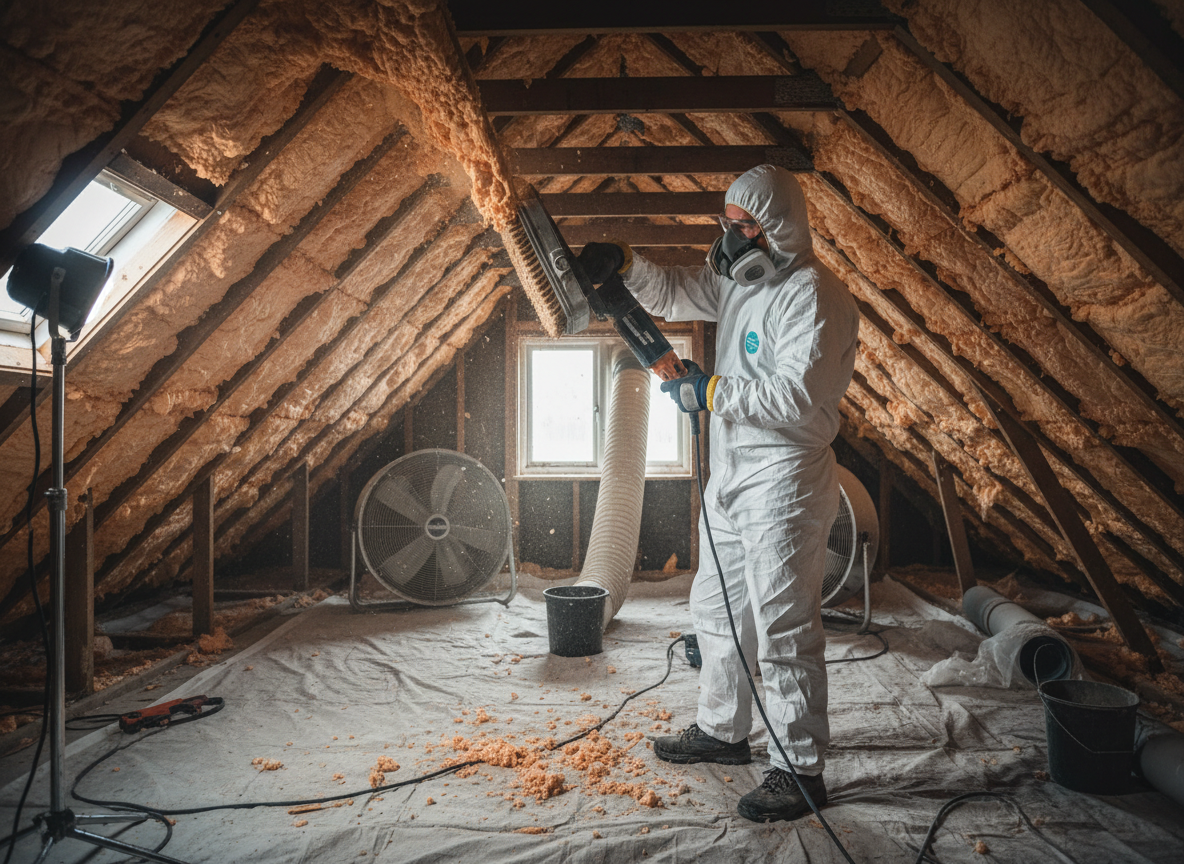
Cheltenham properties often feature pitched roofs with limited loft access and older timber joists that can be damaged during foam removal. We cut the foam in sections using oscillating tools rather than scraping, which reduces dust and protects the original roof structure common in GL51 postcodes. Once the bulk is cleared we vacuum the residue and check for any remaining closed-cell material trapped around pipework or between rafters.
Many homes in the Cheltenham area were insulated with spray foam in the 2000s to meet then-current energy standards. Over time this material can trap moisture against timber, especially on north-facing slopes where rainfall is frequent. Our process includes checking for rot before any new insulation is considered and documenting the condition for the homeowner.
Removal work in Cheltenham frequently involves working around existing electrical cables and water pipes run through the roof void. We isolate circuits where necessary and use low-VOC solvents only when mechanical methods cannot reach residue without risking damage to older lathe and plaster ceilings below.
Seasonal Timing
Work is often scheduled between March and October because winter rain can enter through exposed roof sections during removal. Homeowners in areas such as Charlton Kings and Prestbury notice that cold weather makes the foam more brittle, which can increase airborne particles if not managed with proper containment.
Technician insight
In Cheltenham the thing that catches most people out with spray foam insulation removal is the way older Victorian terraces in areas like St Pauls trap foam behind original lath and plaster ceilings. Once you start cutting you often find the foam has expanded through gaps you cannot see from the loft hatch, and rain on the exposed roof during a job can soak the remaining timber before you finish.
Foam removal in a Charlton Kings semi
Homeowner noticed damp patches on bedroom ceilings after heavy Gloucestershire rain. We found closed-cell foam had been sprayed over the original felt and had started to hold water against the rafters. The foam was sectioned out over two days, the void dried with fans, and the ceiling was left ready for new insulation.
How it works
- 1
Site Assessment
We inspect the roof void, note access points and check for hidden services from our base on Runnings Rd.
- 2
Containment Setup
Dust sheets and extraction fans are positioned to protect living areas below.
- 3
Foam Extraction
Foam is sectioned and removed mechanically, with residue vacuumed from joists and rafters.
- 4
Final Clean and Inspection
All debris is cleared and the space is checked for any remaining material or timber issues.
- 5
Waste Disposal
Removed foam is bagged and taken to an approved Gloucestershire waste facility.
Pricing
Prices vary by property size, foam thickness and access difficulty. We provide a site visit before quoting.